MWINGI

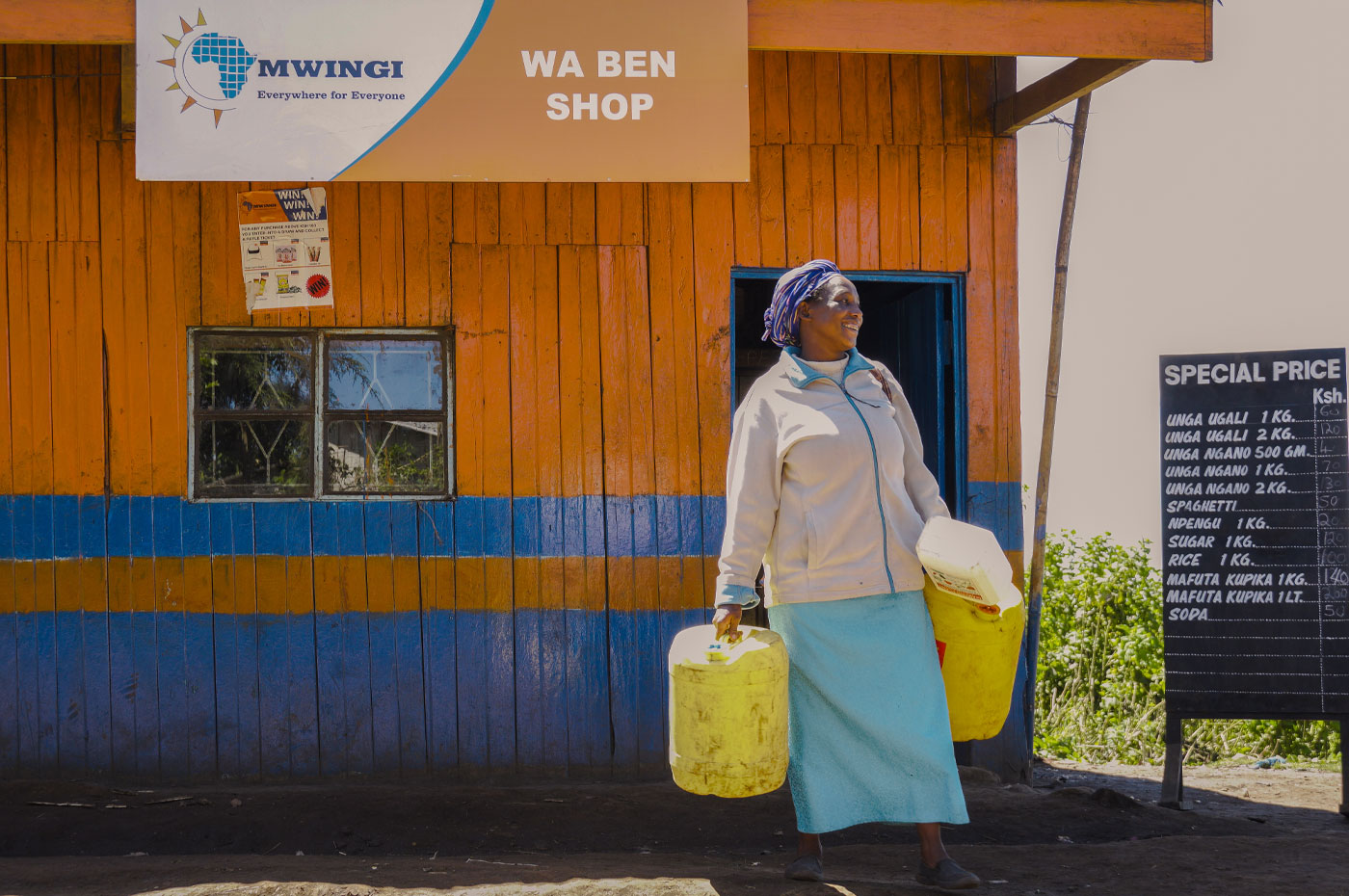
MWINGI empowers rural communities across Africa by providing sustainable and affordable access to essential food staples and household products through reliable last-mile distribution channels, addressing the challenges of access, fair pricing, and poor infrastructure. MWINGI’s 164 franchise shops empower first-time women entrepreneurs who serve more than 160,000 people each month. MWINGI also supplies 2,800 traditional traders and delivers 18,000 kg of food daily to remote villages that lack roads or electricity.
The Problem
Approximately 400 million people living in rural Sub-Saharan Africa face challenges in accessing reliable, affordable essential goods, including basic food staples, personal care products, solar lamps, and other necessities. Small-scale retailers (called “dukas” in Kenya) account for 70% of all retail goods sold across Africa, yet they face crippling challenges. Duka shopkeepers, primarily women and youth, struggle with profitability due to thin margins, limited working capital, lack of affordable credit, and inconsistent supply chains. Poor inventory management leads to frequent stockouts, while supply chain inefficiencies can increase consumer costs by up to 30%. As a result, rural families are forced to pay unfair prices for goods, travel long distances to buy what they need, or go without basic necessities entirely. Not only do supply chain inefficiencies exacerbate financial challenges, deepen inequality, and hinder rural development, but fragmented logistics systems also increase fuel consumption and contribute to carbon emissions.
The Solution
MWINGI solves rural distribution challenges through an innovative hybrid model, operating a network of franchise stores in deep rural areas while simultaneously serving as a wholesale distributor to independent shops. MWINGI distributes goods both to their own franchise store network and to other independent shops along their delivery routes. This combined approach enables MWINGI to purchase products in larger quantities at better prices, generate revenue from both their own shops and sales to other stores, and distribute delivery costs across more sales. MWINGI’s approach has created a unique and sustainable business model that balances the high costs of rural deliveries with the limited purchasing power of price-sensitive, low-income rural consumers.
MWINGI partners with local franchisees to run each shop, providing training, a digital sales system, and — importantly — the initial inventory at no upfront cost. This removes a major barrier for rural entrepreneurs who typically lack the money to stock a store. Shop owners receive weekly deliveries, saving them from making expensive trips to distant towns to buy products. MWINGI focuses on 50 essential items (like flour, rice, and sugar) that make up the majority of what rural families regularly purchase and packages them into smaller, affordable sizes that match local purchasing habits. The entire operation is managed through MWINGI’s digital system, which tracks inventory and sales, helping ensure stores have what customers need when they need it.
Over the next five years, MWINGI plans to expand to more than 2,000 franchise shops nationwide. MWINGI will further increase the profitability of the shops through strategic partnerships (e.g., advertising and promotion of third-party products and services), catalogue sales, commercialization of data, and by creating regional supply centers to make deliveries more efficient.
Impact
- MWINGI delivers 18,000 kg of food each day to remote villages. Their products directly reach about 40,000 rural households, providing basic nutrition for 200,000 people.
- Women franchisees have become successful entrepreneurs without financial risk through MWINGI’s profit-sharing model.
Leadership
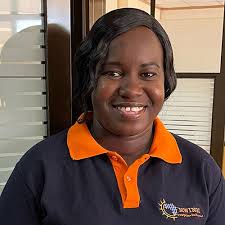
Brenda Mideva
Growing up in rural Kenya, Brenda, co-founder and managing director, witnessed firsthand the challenges of accessing essential goods and services. Before co-founding MWINGI, she gained experience in people management at Solarkiosk and now oversees operations and expansion of MWINGI’s Kenyan team.
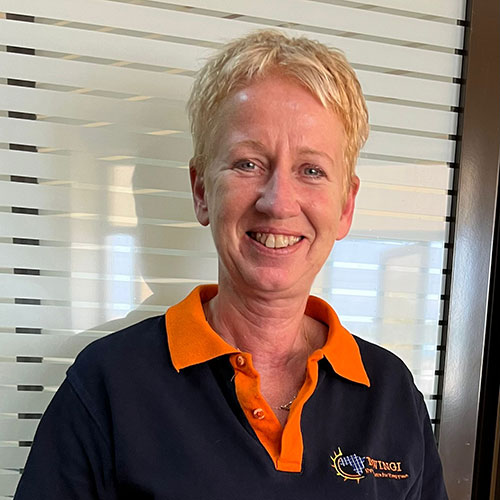
Dr. Manuela Raith
Manuela, co-founder and managing partner, holds a PhD in Mathematics and brings extensive executive experience from Siemens and as Head of Country Management at Solarkiosk, where she gained expertise in last-mile distribution in rural Kenya. She drives MWINGI’s business model and technology innovation.